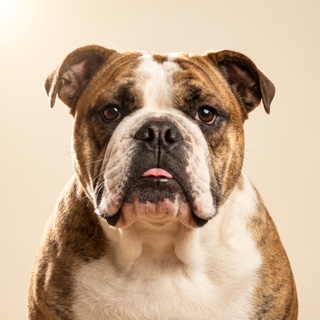
Renaissance is our most-ordered style — the Old Master oil treatment that makes your pet look like a 16th-century noble. Free preview in about 40 seconds; framed prints ship museum-mounted.
Renaissance is the style that started the AI pet portrait category. Old Master oil — Rembrandt lighting, aged canvas texture, visible brushwork — applied to a dog, a cat, or a lizard, is a visual joke that never quite gets old. The joke works because the paint isn't cartoonish; it's genuinely rendered in the technical vocabulary of a 400-year-old medium.
What Renaissance looks like
Warm, dramatic light coming from one direction (usually a window off-frame). Deep shadow on the opposite side. Skin tones (or fur tones) rendered with the same tonal range a Rembrandt uses on a Dutch merchant. The background is dark, textured, and non-competing — your pet is the only lit subject in the frame.
Where other AI styles borrow surface aesthetics, Renaissance borrows composition. That's why the finished portrait doesn't look like a filter — it looks like your pet sat for a court painter.
Which pets look best in Renaissance
- French BulldogsExpressive faces + coat contrast + comedic dignity. Renaissance Frenchies are our top-ordered breed × style.
- PoodlesHistorical bloodline. Poodles have been Renaissance subjects for real, for centuries — the paint knows what to do.
- Golden RetrieversWarm coat + open face + the "wait, is that a noble?" register. Anchors a mantel.
Cats work brilliantly in Renaissance too — the "cat with a lace ruff" joke lands hard. Exotic pets (bearded dragons, cockatoos, rabbits) are the biggest wow because the assumption-break is loudest.
See your pet in Renaissance — free, in about 40 seconds.
Try the free preview →Which rooms Renaissance suits
- Living room mantel. The default. Renaissance frames anchor a room without competing with existing art — the warm palette works with almost every wall color.
- Home office or library. The formal register pairs with bookshelves, wood tones, and reading nooks. Reads as personal without being cute.
- Hallway or dining room. Portrait-format Renaissance pieces reward the tall narrow spaces that don't take a landscape photo well.
Renaissance is not the right pick for nursery / kids' room / bright modern spaces — the tonal register is too heavy. For those, try Watercolor.
How to get the best Renaissance portrait
The photo matters more than the style
Renaissance rewards portrait-style source photos (head-and-shoulders, three-quarter angle) more than full-body action shots. If you have a "sitting proudly" or "looking off into the distance" shot, that's Renaissance gold. If your only photo is a full-body running shot, the paint will still work — but consider Impressionist or Cinematic instead.
Even light beats dramatic light
Counterintuitive: Renaissance's own lighting is dramatic, but the paint model needs even source light to work with. Window light indoors, or open shade outdoors, gives the paint room to add its own drama. Photos already shot with strong side-lighting sometimes fight the medium.
Read the full guide
More detail on source photos in our best photo for a pet portrait guide. And if you're weighing this against another style, the style-selection guide walks through all eight.
Framing a Renaissance portrait
Renaissance is the one style where the frame is genuinely part of the piece. We offer eight frame finishes; three are recommended for Renaissance:
- Black — the museum default. Reads as gallery-formal. Never wrong.
- Walnut — warmer, richer. Pairs with wood-heavy rooms and darker walls.
- Ornate gold (matte) — the most on-nose Renaissance framing. Best for pieces going in a formal room; can feel over-the-top elsewhere.
All framed prints are museum-mounted with a snow-white mat, behind acrylic glazing, made-to-order by our print partner Prodigi on 200gsm archival paper. Ships to the US & Canada in about 3-5 business days.
Common questions
Will my pet look like a caricature or like a real Renaissance painting?
Real Renaissance painting. The paint model was trained on centuries of Old Master work — Rembrandt, van Dyck, Velázquez — not on modern pastiches. Your pet's features stay accurate; the styling is what shifts to match the period.
Can I choose a specific Renaissance painter's style?
Yes-ish. Use the custom-prompt option in the studio and name the painter (Rembrandt, Vermeer, van Dyck, Velázquez). We can't legally reproduce a living artist's style, but historical painters are fair game and the results are strong.
Is Renaissance the right style for a memorial portrait?
It can be. Renaissance reads as heirloom, which fits memorial pieces well. If the register feels too heavy, Classic Oil is a warmer alternative; Charcoal Sketch is a quieter one. See our memorial portrait guide.
How is this different from a filter?
A filter applies surface effects — colors, textures, borders. Renaissance restructures the composition: lighting direction, tonal range, background style, painterly brushwork. The output isn't your photo with an aged-canvas overlay; it's your pet rendered in the technical vocabulary of Old Master oil painting.
How much does a Renaissance portrait cost?
Preview is free. Downloadable file is $9.95. Framed prints run $179-$299 depending on size and frame finish. Every style is the same price — Renaissance isn't a premium tier.