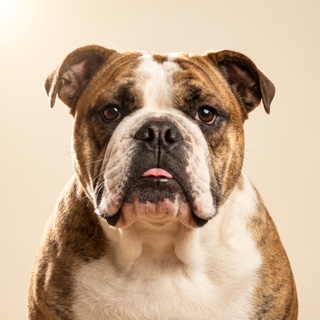
Classic Oil is the warm, timeless mantel piece — the style most first-time buyers land on. Softer than Renaissance, richer than Watercolor, universally room-friendly. Free preview in about 40 seconds.
Classic Oil is the style that answers "just paint my dog, but really well." No costume, no drama, no era — just a warm oil portrait of your pet the way a competent 20th-century portraitist would have painted them. It's the most-ordered style for first-time buyers because it doesn't have a mood or a joke to sell. It just has your pet, painted properly.
What Classic Oil looks like
Warm, even light. A soft-focus background — usually a neutral wash of umber, sage, or dusty blue that lets the pet occupy the whole frame. Brushwork is visible but restrained; the paint is doing service to the subject, not showing off. Coat texture is rendered with the kind of care that lets you count the tonal shifts in a Golden's chest without seeing individual strokes.
Where Renaissance leans into 400-year-old dramatic conventions, Classic Oil borrows from the softer 19th- and 20th-century tradition — Sargent, Bonnard, the Kennedy family's dog portraits. The register is warm and considered without being formal.
Which pets look best in Classic Oil
- Golden RetrieversThe most-painted breed for a reason — that warm coat and open face were made for the medium. Anchor of any room.
- LabradoodlesSoft coat texture holds up beautifully in oil. Reads as the family portrait it usually is.
- French BulldogsThe bat ears and eyes want the warmth of the medium. Reads earnest, not comic.
Classic Oil is the universal starting point — it works for every dog, every cat, and most exotic pets. If you're not sure which style to try first and the pet is not a memorial subject, this is where 60% of first-time buyers land.
See your pet in Classic Oil — free, in about 40 seconds.
Try the free preview →Which rooms Classic Oil suits
- Living room over the mantel. The default. Warm palette works with almost every wall color and existing furniture.
- Dining room. The register scales up beautifully to larger frames; a 24×32" Classic Oil is a real anchor piece.
- Hallways and staircases. The soft palette doesn't fight neighboring art — happy to be one piece in a wall.
- Traditional home offices. Reads as personal without being cute. Zoom-call friendly.
Classic Oil is one of the few styles that works in almost any room. The exceptions: bright modern minimalist spaces (try Watercolor or Cinematic) and graphic-forward rooms (try Pop Art).
How to get the best Classic Oil portrait
The photo matters more than the pose
Classic Oil rewards clear, natural photos more than any specific pose. Head-and-shoulders, three-quarter body, sitting-and-looking — all work. What matters is that the pet's face is in focus and the light is soft.
Window light indoors, open shade outdoors
Even natural light is the paint model's happiest input. Harsh direct sunlight can flatten the tonal range Classic Oil relies on; window-lit and overcast outdoor photos give the medium the most to work with.
Skip the smile
Classic Oil looks best with a relaxed, natural expression — the pet as they are on a normal afternoon. Photos of a pet mid-play or mid-tongue-out can be great for Cinematic or Pop Art but the register fights Classic Oil's calm warmth.
Framing a Classic Oil portrait
Classic Oil pairs with any frame finish. Three combinations are especially strong:
- Walnut — the warmest match. Wood grain echoes the palette of the paint; classic mantel look.
- Black — the versatile choice. Never wrong; reads gallery-formal.
- Natural oak — the modern match. Best for homes leaning contemporary or Scandinavian.
All framed prints are museum-mounted with a snow-white mat behind acrylic glazing, made-to-order by our print partner Prodigi on 200gsm archival paper. Ships to the US & Canada in about 3-5 business days.
Common questions
What's the difference between Classic Oil and Renaissance?
Classic Oil is warmer, softer, and more modern in reference — think 20th-century portraiture. Renaissance is more dramatic, formal, and specifically borrows Old Master lighting and composition. Classic Oil is the everyday choice; Renaissance is the mantel-piece with a wink.
Is Classic Oil the right style for a memorial portrait?
Yes — it's one of the top three memorial choices, alongside Charcoal Sketch and Renaissance. The warmth of the medium reads as tribute rather than tragedy. See our memorial portrait guide for how families have chosen between the three.
Will the background be plain or detailed?
Plain by default — a soft neutral wash that keeps focus on the pet. If you want a specific setting (bookshelf, garden, fireplace), use the custom-prompt option in the studio to describe it and we'll paint it in.
Can I get Classic Oil on canvas instead of framed print?
Yes — Classic Oil is the style most people order on gallery-wrapped canvas because the medium reads especially "painted" without a frame around it. See the canvas page for sizes and pricing.
How much does a Classic Oil portrait cost?
Preview is free. Downloadable file is $9.95. Framed prints run $179-$299 depending on size and frame finish. Canvas is $99-$169. Every style is the same price — Classic Oil isn't a premium tier.