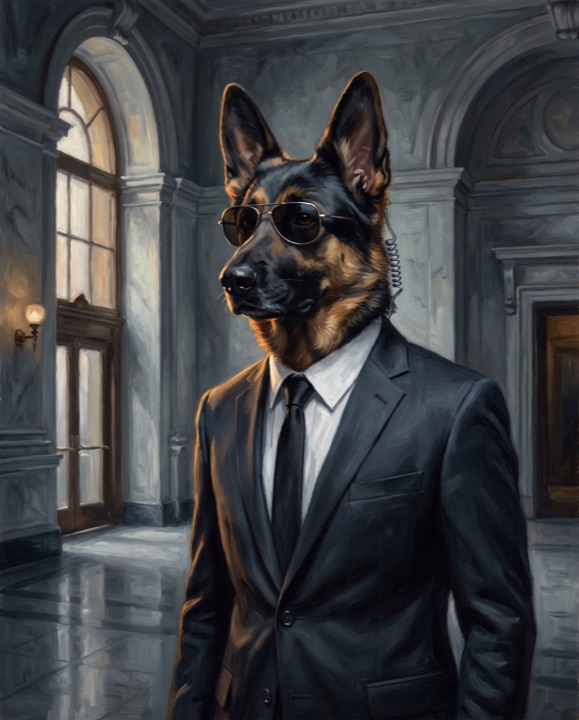
GSDs have one of the most sculptural faces in dogdom — that mask, those ears, the alertness. Renaissance, Cinematic, and Oil catch the noble register best. Free preview in about 40 seconds.
The German Shepherd is the breed people describe as "noble" without meaning to. That sculpted face — the classic saddle mask, the tall ears, the alert eyes — sits in the exact visual grammar that Renaissance and formal Oil portraiture has been rewarding for four centuries. The paint knows what to do with a GSD.
One photo from your phone, about 40 seconds, free preview. If your Shepherd's expression lands the way you hoped it would, we ship a framed print in the US & Canada. If not, you paid nothing.
Why GSDs are one of the most rewarding portrait subjects
- The face is doing serious work. The saddle mask, tall alert ears, and intelligent expression give the paint model an unusually rich set of features to render. Every medium — from Oil to Charcoal — surfaces the character.
- Coat carries pattern beautifully. Black-and-tan, black sable, solid black, white, liver, blue — the saddle-and-tan pattern in particular renders as one of the most graphically striking looks in the /breeds catalog.
- Working-dog stance photographs cleanly. GSDs stand and sit with an alertness most breeds relax out of. That posture reads as portraiture-ready even in a phone snap.
Best painting styles for a German Shepherd
- RenaissanceOld Master oil, warm chiaroscuro. GSDs in Renaissance read as court-noble portraits — the pattern the paint model was trained on for centuries.
- CinematicStudio-lit photograph with magazine-cover tonal quality. Best for the working-dog register — protection dog, K9, hero shot.
- Classic OilWarm, timeless, mantel-worthy. The default for a family GSD — hangs above a fireplace for 30 years without dating.
- Charcoal SketchGraphite and shadow on fine paper. The register for a memorial piece, or for anyone who wants restraint over color.
Or read the full style guides: Renaissance, Cinematic, Classic Oil, Charcoal Sketch.
See your German Shepherd in every medium — free, in about 40 seconds.
Try the free preview →What photo works best
- Alert posture. GSDs at attention (ears up, gaze focused) paint dramatically better than relaxed lounging shots.
- Eye-level. Get down to the dog's head height so the face reads at proper proportions — most Shepherds are taller than owners realize when standing.
- Even light. Indoor window light or open shade outdoors — direct sun blows out the coat pattern that makes GSDs distinctive.
- Three-quarter angle to catch the saddle marking. A pure profile hides the saddle; a pure front hides the ears. Three-quarter gets both.
Want more detail? Read our full guide to the best photo for a pet portrait.
How it works
- Add one photo. Any clear shot of your German Shepherd — close-up or full body.
- Pick a style. Renaissance, Watercolor, Cinematic, Pop Art, and 4 more. Or take our 30-second style quiz.
- Preview in ~40 seconds. No card, no sign-up. Try as many looks as you want.
- Order the print. Framed giclée, canvas, poster, or metal — museum-mounted by Prodigi, ships to the US & Canada.
Common questions
Will the paint keep my Shepherd's specific saddle pattern?
Yes — the coat pattern is the whole point. Black-and-tan, sable, solid black, bi-color, white — the paint respects your specific dog's pattern head to tail. If your GSD has a distinctive white chest patch or dark mask, those carry through.
What about long-coat vs. plush-coat vs. standard German Shepherds?
All three work. Long-coat Shepherds reward Impressionist and Watercolor (the coat becomes brushstrokes). Plush and standard coats suit Oil and Cinematic (the anatomy shows). Same process, same 40-second preview.
Can I get my GSD in a working / K9 / protection dog scene?
Yes. Pick a scene from the studio (Detective, Firefighter, Guardian) or describe your own idea. Full-body photos work best when the scene is the story.
What size print works best for a Shepherd?
GSDs suit larger prints — the coat pattern rewards being seen. 20"×24" or 24"×32" framed reads best for wall placement. Smaller sizes work but the saddle-marking detail is harder to appreciate.
How much does it cost?
Preview is free. Real photo prints start at $14.95, framed prints run $179–$299 depending on size and finish. Every print ships with the hi-res digital file — included free.
Memorial portrait for a pet you lost
If you're here because your German Shepherd passed, we've written a separate guide on how we approach memorial portraits — the older-photo question, the framing choice, and the pieces we've made for other families going through the same thing. Read the memorial guide →
Other breed guides
- French BulldogFrenchies have some of the most expressive faces in dogdom — big eyes, batty ears, that trademark side-eye. Renaissance, Pop Art, and Cinematic styles catch it best. Free preview in about 40 seconds.
- Labrador RetrieverLabs are the most-owned breed in America — that blocky face and short coat suit Oil, Impressionist, and Cinematic best. Yellow, black, chocolate, all render beautifully. Free preview in about 40 seconds.
- Golden RetrieverGoldens are the most-painted breed for a reason — that warm coat and open face flatter every medium. Impressionist and Oil hit hardest; Watercolor softens for a nursery register. Free preview in about 40 seconds.
- Siberian HuskyHuskies are one of the most photogenic breeds on the planet — the mask, the eyes, the coat pattern all read across the room. Cinematic, Van Gogh, and Renaissance all reward them. Free preview in about 40 seconds.
- DachshundDoxies have one of the most graphic silhouettes in dogdom — the long body, big personality, that specific face. Pop Art, Watercolor, and Cinematic all lean in. Free preview in about 40 seconds.
- GoldendoodleDoodles are all about the coat — those soft curls and warm cream-to-apricot tones. Watercolor and Impressionist mediums render them best. Free preview in about 40 seconds.