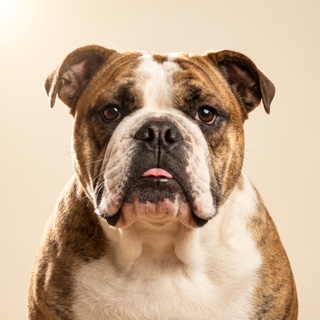
Van Gogh is our most kinetic style — thick swirling brushwork, vibrant color, the specific energy of post-impressionism. Best for outdoor pets and rooms that want life on the wall. Free preview in about 40 seconds.
Van Gogh is the style that moves. Thick impasto brushwork, swirling directional strokes, vibrant color placed intentionally next to its complement — the visual grammar Vincent used to paint sunflowers, wheat fields, and Starry Night, applied to your pet. Every brushstroke is a graphic element you can see. The result feels alive in a way most painted styles don't.
What Van Gogh looks like
Thick paint (impasto) that catches light on the physical surface of the print. Brushstrokes rendered as directional lines — they flow with the form of the subject rather than blending into it. Color pushed to its brightest register: yellows are actual yellow, blues are cobalt, greens are chlorophyll green. Backgrounds carry as much movement as the pet — a Van Gogh dog in a field of wheat has swirling wheat AND a dog with the same energy.
Where Impressionist is quieter and more dappled, Van Gogh is louder and more directional. Both are post-1870 European traditions; Van Gogh took Impressionism's color and added his own signature kinetic movement.
Which pets look best in Van Gogh
- Golden RetrieversWarm coat + outdoor-happy breed = Van Gogh's ideal subject. The swirling brushwork treats the golden coat like a field of wheat.
- Australian ShepherdsMerle coats already look like brushwork. Van Gogh amplifies the pattern into pure kinetic energy.
- Bernese Mountain DogsBig dogs with big coats reward Van Gogh's thick paint. The tricolor pattern becomes a graphic composition of yellow, black, and rust strokes.
Van Gogh is one of the best styles for pets you associate with outdoors — running, hiking, at the beach, in a garden. The medium rewards environmental context. Indoor pets work too, but the style is quieter when the surrounding world isn't part of the composition.
See your pet in Van Gogh — free, in about 40 seconds.
Try the free preview →Which rooms Van Gogh suits
- Sunrooms and enclosed porches. The obvious fit — bright natural rooms echo the medium's own light.
- Family rooms and kitchens. The energy of Van Gogh works in rooms that are actively lived in.
- Modern lofts with color-forward decor. The saturated palette pairs with jewel-tone furniture, plants, and warm woods.
- Reading nooks and studios. Van Gogh's kinetic energy makes rooms feel alive without adding actual clutter.
Van Gogh is not the pick for stark minimalist rooms, formal dining rooms, or memorial contexts — the register is too vibrant. For those, try Classic Oil or Charcoal.
How to get the best Van Gogh portrait
Outdoor photos are strongly preferred
Unlike most styles, Van Gogh genuinely wants outdoor source material. A pet in a garden, on a trail, at the beach, in a field — the medium loves surrounding landscape it can render with the same brushwork as the pet.
Golden hour beats midday
Warm angled light of early morning or late afternoon suits Van Gogh's saturated palette best. Overhead noon light flattens the tonal range the swirling brushwork needs to work with.
Full-body works especially well
Van Gogh's whole aesthetic is composition + environment. A full-body outdoor shot gives the medium what it wants: your pet AND the world around them, both rendered in the same directional brushwork.
Framing a Van Gogh portrait
Van Gogh wants warm, unassuming frames — the painting is already doing all the visual work. Three recommended finishes:
- Natural oak — the default. Wood grain complements the warm palette; reads modern and considered.
- Walnut — the richer version. Best for larger pieces and traditional rooms.
- No frame — gallery canvas — Van Gogh on stretched canvas is a top-selling combination. The impasto brushwork reads more physical without glazing.
All framed prints are museum-mounted with a snow-white mat behind acrylic glazing, made-to-order by our print partner Prodigi on 200gsm archival paper. Ships to the US & Canada in about 3-5 business days.
Common questions
What's the difference between Van Gogh and Impressionist?
Both are post-1870 European traditions with visible brushwork. Impressionist (Monet, Renoir) is quieter, more dappled, with softer color blending. Van Gogh took Impressionism's ideas and added his own signature kinetic brushwork and saturated color. Impressionist feels contemplative; Van Gogh feels alive.
Will the paint show real impasto texture in print?
The print shows the visual impression of impasto — you can see every brushstroke and directional flow. It won't literally have raised paint (it's a giclée print on paper, not an oil painting), but the visual character is unmistakably Van Gogh.
Can I request a specific Van Gogh painting's energy?
Yes — use the custom-prompt option and name the reference ("in the style of Van Gogh's Sunflowers", "with the swirling sky of Starry Night", "in the palette of the Wheatfield with Crows"). The paint model has all of Van Gogh's major works in its training data.
Is Van Gogh good for indoor pet photos?
Workable but not ideal. Van Gogh's whole vocabulary centers on environment + subject as one composition. Indoor photos work but the background loses most of what makes the medium distinctive. For indoor pets, try Impressionist or Watercolor.
How much does a Van Gogh portrait cost?
Preview is free. Downloadable files start at $9.95. Framed prints run $179-$299 depending on size and finish. Canvas $99-$169. Every style is the same price.