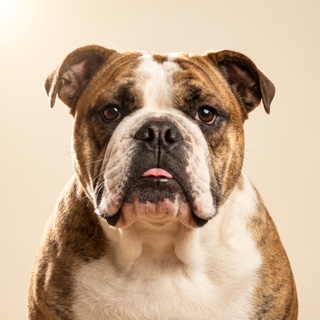
The Doberman is a portrait subject painting mediums treat with real dignity. Sleek sculpted build, alert intelligent face, distinctive rust markings on a black (or red, blue, or fawn) base — every element gives the paint model a subject with genuine visual authority. Cinematic renders Dobermans as magazine-cover working dogs; Renaissance gives them guardian-noble gravitas.
One photo, about 40 seconds, free preview. Classic black-and-rust, red-and-rust, blue-and-rust, fawn (Isabella) — every Doberman coloring renders accurately from the specific dog in your photo.
Why Dobermans paint with real authority
- The build is sculptural. Sleek athletic frame, deep chest, visible muscle definition. Cinematic and Renaissance especially reward the physicality — three-quarter shots capture what makes the breed distinctive.
- The rust markings are composition. Specific placement on the muzzle, chest, eyebrows, legs — the paint model has natural focal geometry to work from. Every medium respects the pattern.
- Intelligence photographs. Doberman faces carry a specific alert-guardian expression that reads across the room. Wall art needs that legibility; the paint keeps the intensity.
Best painting styles for a Doberman
- CinematicStudio-photograph polish. Dobermans in Cinematic read as magazine-cover working dogs — sculpted build in razor focus, alert eyes with catchlight.
- RenaissanceOld Master oil with dramatic chiaroscuro. Dobermans in Renaissance carry a specific guardian-noble weight — the coat markings read as intentional formal styling.
- Classic OilWarm, timeless, mantel-worthy. The everyday Doberman portrait — anchors a family room with the loyal-protector register.
- Charcoal SketchGraphite and shadow on fine paper. The sculpted anatomy reads especially beautifully in monochrome — pure form, no color distraction.
Or read the full style guides: Cinematic, Renaissance, Classic Oil, Charcoal Sketch.
See your Doberman in every medium — free, in about 40 seconds.
Try the free preview →What photo works best
- Alert posture. Dobermans at attention paint dramatically better than sleeping or relaxed shots — the intelligence needs alertness to read.
- Three-quarter angle catches both the face and the sculpted build. Full-body works for larger prints where the whole frame reads.
- Even light. The rust markings need light that reads the color transitions — direct sun blows them out into indistinct dark.
- Get the eye catchlight. Doberman eyes are dark and deep-set; a small window highlight in each eye gives the paint far more to work with.
Want more detail? Read our full guide to the best photo for a pet portrait.
How it works
- Add one photo. Any clear shot of your Doberman — close-up or full body.
- Pick a style. Renaissance, Watercolor, Cinematic, Pop Art, and 4 more. Or take our 30-second style quiz.
- Preview in ~40 seconds. No card, no sign-up. Try as many looks as you want.
- Order the print. Framed giclée, canvas, poster, or metal — museum-mounted by Prodigi, ships to the US & Canada.
Common questions
Will the paint keep my Doberman's specific rust markings?
Yes — the marking placement is preserved head to tail. The muzzle rust, chest triangle, eyebrow spots, and leg patterning all carry through accurately.
What about the rarer color variations — red, blue, fawn (Isabella)?
All render accurately. Red-and-rust (warmer) reads softer than classic black-and-rust. Blue-and-rust (dilute black) has a specific grey-mahogany register. Fawn/Isabella (dilute red) is the softest — reads almost photographic in the coat.
My Doberman has cropped ears / natural ears — will it show?
The paint reflects what's in the source photo. Cropped-ear Dobermans (traditional, upright) or natural-ear (floppy, increasingly common outside the US) both render accurately. Same for docked vs natural tail.
What size print works best for a Doberman?
24×32 framed reads especially well — the sculpted build and coat markings both benefit from scale.
How much does it cost?
Preview is free. Real photo prints start at $14.95, framed prints run $179–$299 depending on size and finish. Every print ships with the hi-res digital file — included free.
Memorial portrait for a pet you lost
If you're here because your Doberman passed, we've written a separate guide on how we approach memorial portraits — the older-photo question, the framing choice, and the pieces we've made for other families going through the same thing. Read the memorial guide →
Other breed guides
- French BulldogFrenchies have some of the most expressive faces in dogdom — big eyes, batty ears, that trademark side-eye. Renaissance, Pop Art, and Cinematic styles catch it best. Free preview in about 40 seconds.
- Labrador RetrieverLabs are the most-owned breed in America — that blocky face and short coat suit Oil, Impressionist, and Cinematic best. Yellow, black, chocolate, all render beautifully. Free preview in about 40 seconds.
- Golden RetrieverGoldens are the most-painted breed for a reason — that warm coat and open face flatter every medium. Impressionist and Oil hit hardest; Watercolor softens for a nursery register. Free preview in about 40 seconds.
- German ShepherdGSDs have one of the most sculptural faces in dogdom — that mask, those ears, the alertness. Renaissance, Cinematic, and Oil catch the noble register best. Free preview in about 40 seconds.
- Siberian HuskyHuskies are one of the most photogenic breeds on the planet — the mask, the eyes, the coat pattern all read across the room. Cinematic, Van Gogh, and Renaissance all reward them. Free preview in about 40 seconds.
- DachshundDoxies have one of the most graphic silhouettes in dogdom — the long body, big personality, that specific face. Pop Art, Watercolor, and Cinematic all lean in. Free preview in about 40 seconds.