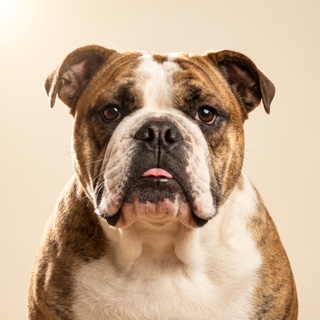
The Jack Russell Terrier is the breed painting mediums treat like concentrated attitude in a small package. Compact athletic build, alert expression, the specific terrier stance — every medium respects the big-attitude-small-body register. Pop Art reads them as personality-first graphic subjects; Cinematic renders them as magazine-cover terrier athletes; Renaissance treats them as noble hunting companions.
One photo, about 40 seconds, free preview. Jack Russells come in three coat types (smooth, broken, rough) and typically wear white with tan, black, or tricolor patches. The paint respects the specific coat type, the specific marking placement, and the specific "here for it" expression that makes every JRT unique.
Why Jack Russells paint like concentrated attitude
- The stance carries in every medium. Alert, forward-leaning, always about to launch after something — JRTs have a specific action-ready posture that reads across styles.
- The face is expressive. Bright eyes, mobile ears (dropped, semi-erect, or fully erect), the specific terrier intensity — Cinematic and Renaissance respect the register.
- Coat type variety is the range. Smooth coats read graphic; broken coats read textured; rough coats read painterly. The paint respects the specific coat of your dog.
Best painting styles for a Jack Russell
- Pop ArtBright, graphic, high-contrast. JRTs in Pop Art read as personality-first — the specific terrier attitude becomes graphic language.
- CinematicStudio-photograph polish. JRTs in Cinematic read as magazine-cover terrier athletes — coat markings in razor focus, alert eyes preserved.
- RenaissanceOld Master oil with dramatic chiaroscuro. JRTs in Renaissance read as noble hunting companions — the small size against classical composition adds real drama.
- Classic OilWarm, timeless, mantel-worthy. The everyday JRT portrait — anchors a room with the character-companion register.
Or read the full style guides: Pop Art, Cinematic, Renaissance, Classic Oil.
See your Jack Russell Terrier in every medium — free, in about 40 seconds.
Try the free preview →What photo works best
- Catch them alert. JRTs at attention paint more dramatically than JRTs at rest. Squeaky toy above the phone lens plus burst mode.
- Squat to eye level. JRTs are small — a photo taken from their perspective reads more portrait than pet-parent snapshot.
- Show the marking pattern. Every JRT has a unique tan/black patch distribution; a photo where the pattern is visible paints as more distinctively your dog.
- Face-forward or three-quarter. The specific terrier expression reads best from the front; profile hides the mobile-ear personality.
Want more detail? Read our full guide to the best photo for a pet portrait.
How it works
- Add one photo. Any clear shot of your Jack Russell Terrier — close-up or full body.
- Pick a style. Renaissance, Watercolor, Cinematic, Pop Art, and 4 more. Or take our 30-second style quiz.
- Preview in ~40 seconds. No card, no sign-up. Try as many looks as you want.
- Order the print. Framed giclée, canvas, poster, or metal — museum-mounted by Prodigi, ships to the US & Canada.
Common questions
Jack Russell vs Parson Russell vs Russell Terrier — same breed?
Related breeds with different standards. Jack Russells are the shorter-legged working type; Parson Russells are the taller AKC show version; Russell Terriers are a separate FCI standard. The paint respects the specific proportions in your source photo — different types read as different dogs.
Will the paint keep my JRT's specific coat type?
Yes. Smooth JRTs render as smooth; broken JRTs render with the specific wire-patch pattern; rough JRTs render with full wire coat. The paint respects what your source photo shows.
My JRT never sits still. What works?
Burst mode plus a squeaky toy or treat above the phone lens. Or catch them mid-focus (staring at a squirrel or watching movement) — JRTs have short attention windows but sharp ones. Working-terrier "on point" photos paint dramatically.
What about related terrier breeds — Fox Terrier, Rat Terrier, Toy Fox Terrier?
All render accurately. Fox Terriers share the specific white-with-patches coat; Rat Terriers are similar but with different proportions; Toy Fox Terriers are smaller. The paint respects the specific breed proportions in your source photo.
How much does it cost?
Preview is free. Real photo prints start at $14.95, framed prints run $179–$299 depending on size and finish. Every print ships with the hi-res digital file — included free.
Memorial portrait for a pet you lost
If you're here because your Jack Russell Terrier passed, we've written a separate guide on how we approach memorial portraits — the older-photo question, the framing choice, and the pieces we've made for other families going through the same thing. Read the memorial guide →
Other breed guides
- French BulldogFrenchies have some of the most expressive faces in dogdom — big eyes, batty ears, that trademark side-eye. Renaissance, Pop Art, and Cinematic styles catch it best. Free preview in about 40 seconds.
- Labrador RetrieverLabs are the most-owned breed in America — that blocky face and short coat suit Oil, Impressionist, and Cinematic best. Yellow, black, chocolate, all render beautifully. Free preview in about 40 seconds.
- Golden RetrieverGoldens are the most-painted breed for a reason — that warm coat and open face flatter every medium. Impressionist and Oil hit hardest; Watercolor softens for a nursery register. Free preview in about 40 seconds.
- German ShepherdGSDs have one of the most sculptural faces in dogdom — that mask, those ears, the alertness. Renaissance, Cinematic, and Oil catch the noble register best. Free preview in about 40 seconds.
- Siberian HuskyHuskies are one of the most photogenic breeds on the planet — the mask, the eyes, the coat pattern all read across the room. Cinematic, Van Gogh, and Renaissance all reward them. Free preview in about 40 seconds.
- DachshundDoxies have one of the most graphic silhouettes in dogdom — the long body, big personality, that specific face. Pop Art, Watercolor, and Cinematic all lean in. Free preview in about 40 seconds.