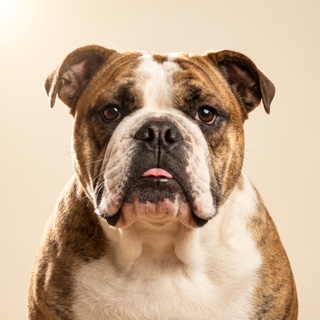
Labradoodles have some of the friendliest faces in the doodle family — and the athletic build to match. Watercolor, Impressionist, and Oil all render them beautifully. Free preview in about 40 seconds.
Labradoodles carry the best of both parents — the Lab's blocky, honest face and the Poodle's coat variety. That combo makes them one of the most rewarding breeds to paint. A Labradoodle in Watercolor looks nothing like a Labradoodle in Renaissance, and yet both unmistakably read as your dog.
We paint from one photo you already have. No shoot, no reference sheet. Preview appears in about 40 seconds, and you only pay if you love it.
Why Labradoodles paint well
- The face is warm and open. Labs contributed the wide-set eyes and easy-going expression. It reads friendly in every medium — even Renaissance can't make a Labradoodle look severe.
- Coat variety is a feature. Fleece, wool, or hair — each translates to a different painted texture. Fleece coats show brushwork best; wool coats hold Oil impasto; hair coats look great in Cinematic (photorealistic).
- Athletic build reads on canvas. Labradoodles have shoulders. A three-quarter or full-body shot rewards materials with a wider aspect ratio (canvas, poster) — you get the whole animal in the frame.
Best painting styles for a Labradoodle
- WatercolorSoft washes that treat every wave as a brushstroke. The default for a room that leans warm and personal.
- ImpressionistDappled light and broken brushwork. Best for pets you associate with a specific outdoor place.
- Classic OilWarm, timeless, mantel-worthy. The style built to hang for the next 30 years without dating.
- CinematicA real studio-lit photograph. Best for hair-coat Doodles where fur texture reads photographically.
Or read the full style guides: Watercolor, Impressionist, Classic Oil, Cinematic.
See your Labradoodle in every medium — free, in about 40 seconds.
Try the free preview →What photo works best
- Even light — window light indoors or shade outdoors. Sunlight on curly coats can lose all the wave detail to blown highlights.
- Eye-level. Labs and Doodles are tall; get down to their height so the face reads at its natural proportions.
- Post-grooming photos usually paint better than mid-shed shots, but the AI handles either. Use the shot you love.
- Full-body works if you want them in a scene — otherwise a three-quarter head-and-shoulders gives the classic wall portrait.
Want more detail? Read our full guide to the best photo for a pet portrait.
How it works
- Add one photo. Any clear shot of your Labradoodle — close-up or full body.
- Pick a style. Renaissance, Watercolor, Cinematic, Pop Art, and 4 more. Or take our 30-second style quiz.
- Preview in ~40 seconds. No card, no sign-up. Try as many looks as you want.
- Order the print. Framed giclée, canvas, poster, or metal — museum-mounted by Prodigi, ships to the US & Canada.
Common questions
My Labradoodle looks totally different when groomed vs. shaggy. Which photo should I use?
Whichever version of your dog you want on the wall for the next 20 years. Most families pick the shaggier "them" look because it feels more like the dog they live with — but a fresh grooming shot reads more formal and paints cleaner. Either works; you can try both previews for free.
What about F1, F1B, F2 — does the generation matter?
No — we paint from the photo, not the pedigree. Whatever coat and features your specific dog has, that's what the portrait shows.
Can you catch my Doodle's specific coat color and patches?
Yes. Cream, apricot, red, chocolate, parti, phantom, sable — the paint respects the coat you have, head to tail. Any specific patches or markings carry through.
What if my Doodle won't sit still for a photo?
Burst mode. Snap 5-10 shots in a row and pick the sharpest — one usually catches them mid-blink between excitement. Treats above the phone lens work if the burst approach doesn't.
How much does it cost?
Preview is free. Real photo prints start at $14.95, framed prints run $179–$299 depending on size and finish. Every print ships with the hi-res digital file — included free.
Memorial portrait for a pet you lost
If you're here because your Labradoodle passed, we've written a separate guide on how we approach memorial portraits — the older-photo question, the framing choice, and the pieces we've made for other families going through the same thing. Read the memorial guide →
Other breed guides
- French BulldogFrenchies have some of the most expressive faces in dogdom — big eyes, batty ears, that trademark side-eye. Renaissance, Pop Art, and Cinematic styles catch it best. Free preview in about 40 seconds.
- Labrador RetrieverLabs are the most-owned breed in America — that blocky face and short coat suit Oil, Impressionist, and Cinematic best. Yellow, black, chocolate, all render beautifully. Free preview in about 40 seconds.
- Golden RetrieverGoldens are the most-painted breed for a reason — that warm coat and open face flatter every medium. Impressionist and Oil hit hardest; Watercolor softens for a nursery register. Free preview in about 40 seconds.
- German ShepherdGSDs have one of the most sculptural faces in dogdom — that mask, those ears, the alertness. Renaissance, Cinematic, and Oil catch the noble register best. Free preview in about 40 seconds.
- Siberian HuskyHuskies are one of the most photogenic breeds on the planet — the mask, the eyes, the coat pattern all read across the room. Cinematic, Van Gogh, and Renaissance all reward them. Free preview in about 40 seconds.
- DachshundDoxies have one of the most graphic silhouettes in dogdom — the long body, big personality, that specific face. Pop Art, Watercolor, and Cinematic all lean in. Free preview in about 40 seconds.